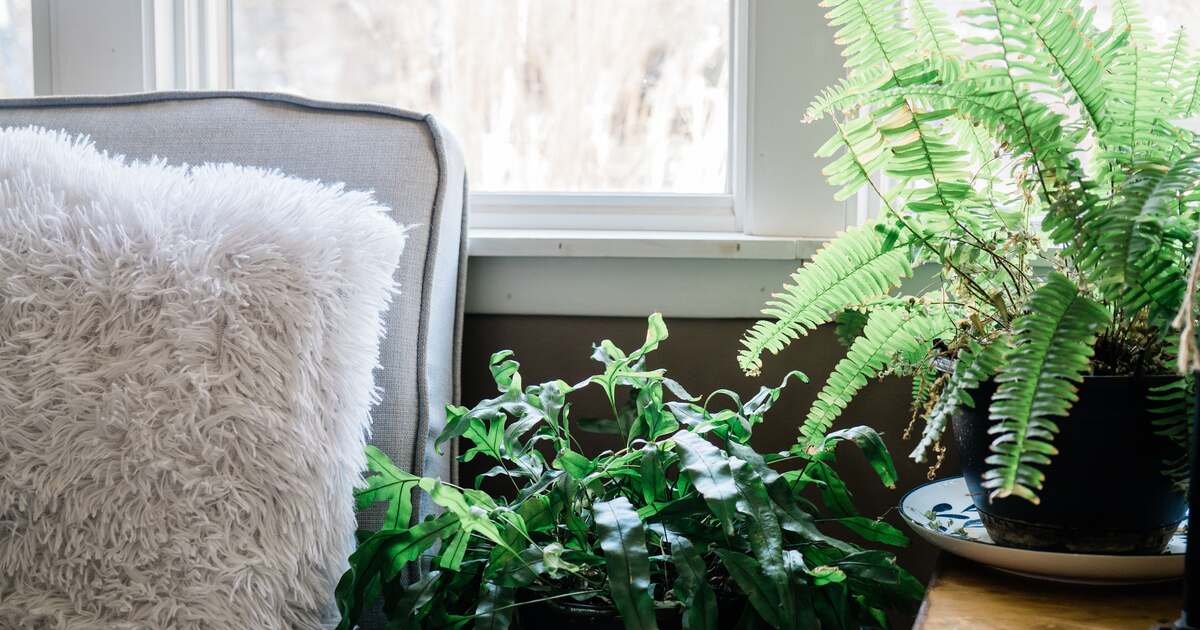
Houseplants in winter run into trouble for reasons that have almost nothing to do with disease. The days shorten, the sun sits lower, the heating comes on and the air dries out, and the windowsill that was ideal in July turns cold at night. The plant slows down. The routine usually does not. Most winter problems start in that gap.
The main problems for houseplants in winter are overwatering, dry air and cold windows. Less light means slower growth and much less water use, so the same watering routine keeps the mix wet and invites root rot and fungus gnats. Heated air favors spider mites and brown leaf tips. Cold glass and drafts cause yellowing and dry leaf edges.
All three are easier to prevent than to fix, and all three have their conditions arriving now, as the light drops through autumn. This is a watch list: what to look for over the next few months, and the single change for each that is worth making before symptoms appear.
Why do houseplants struggle when the light drops?
The University of Illinois Extension puts it simply: light is perhaps the greatest factor limiting houseplant growth in winter. Shorter days and a lower sun change how much light reaches each spot in the house, and a window that was bright in summer may be much dimmer by December.
Less light means less growth, and less growth means the plant uses far less water. Illinois describes nearly all houseplants as coasting all winter long, unable to use water the way they do in the growing season. That is the root of the first and most common winter problem.
Problem one: the mix stays wet
This is the big one. Illinois says more houseplants die during winter from overwatering than from underwatering. The Royal Horticultural Society makes the same point from the symptom side: overwatering can cause wilting that is easy to mistake for thirst, especially over winter when growth slows, so plants get watered again and drowned.
What to watch for. Yellowing on old and new leaves at the same time, a plant that droops even though the mix is wet, a pot that stays heavy for many days after watering, and soft, dark roots. The overwatered plant symptoms post lays out how to tell this from genuine thirst.
The early warning on the soil surface. Fungus gnats. Colorado State University Extension notes that fungus gnat larvae live in the growing medium feeding on fungi, algae and roots, and that indoors the cycle runs continuously year round. So a pot that never dries through the winter tends to produce small dark flies at the nearest window. Colorado State notes the adults do not bite and do not feed on plants, and the fungus gnats guide covers identification, but their arrival is a reliable sign the mix is staying too wet. Colorado State’s advice for them doubles as the winter watering rule: let the growing medium dry between waterings, especially the top one to two inches.
The change to make now. Stop watering by the calendar. Illinois recommends checking the soil by touch and watering only when the upper layer feels dry, and another Illinois Extension article says it is better to keep soils on the dry side in winter, though plants should never wilt. Empty saucers after watering. And stop feeding: Illinois advises not giving plant food while houseplants are inactive.
Problem two: the air dries out
When the heating runs, indoor air gets very dry. Illinois says most houseplants prefer 40 to 50 percent humidity for healthy growth, and that indoor winter air can sometimes drop below 20 percent.
What to watch for. Two things. First, brown, crispy leaf tips and edges, which the RHS calls a classic sign of low air humidity, sometimes with leaves, buds and flowers dropping early. Second, spider mites. Colorado State says dry conditions greatly favor all spider mites, partly because their natural predators need more moisture. Watch for fine pale speckling on the leaves and, in heavier cases, fine webbing in the leaf joints. The spider mites post covers the white paper test that confirms them and the rinse-first routine that follows.
The change to make now. Raise the humidity around the plants before the heating season is in full swing. Illinois suggests grouping plants together so they share the moisture around them, or setting them on trays of gravel or sand with water, where evaporation raises the humidity around them. Move plants away from heat vents, which Illinois lists among the places to avoid, and away from radiators.
Problem three: cold windows and drafts
In summer the windowsill is the best spot in the house. In winter the glass gets cold at night, and a plant touching it or sitting in a draft can be damaged.
What to watch for. The RHS says drafts can cause leaf yellowing and dry leaf edges. It also points out a detail that is easy to miss: if curtains are drawn on cold nights, plants on windowsills can suffer because cold air is trapped between the window and the curtain. Damage tends to show on the side of the plant nearest the glass or the draft.
The change to make now. Illinois advises keeping plants away from drafts, cold windows and heat vents. On cold nights, move sill plants to the room side of the curtain, and keep leaves from touching the glass. Watch plants near exterior doors that open often.
What about the light itself?
The light drop cannot be prevented, but it can be managed. Illinois suggests watching how each window’s light changes through the season, since spots that were bright in summer may become too dim while others brighten as the sun moves lower. Moving plants that need more light closer to the brightest window for the winter helps. The RHS lists weak, spindly growth and pale leaves as signs a plant is not getting enough light, and some of that is normal in winter. It is not a reason to feed or water more. One plant actually needs the longer nights: a Christmas cactus sets its buds on them, and why a Christmas cactus is not blooming covers how to give it the dark it is waiting for.
The watch list, in one place
- Water by touch, not by date. Wait for the top of the mix to dry.
- Stop feeding until growth resumes in spring.
- Group plants and use pebble trays to raise humidity, away from vents and radiators.
- Keep leaves off cold glass and move sill plants to the room side of the curtain on cold nights.
- Check the undersides of leaves every few waterings for speckling or webbing.
- Treat fungus gnats as a watering signal, not just a pest.
The soil section of the symptom checker covers the other things that show up on top of a pot that stays wet.
Winter changes are slow, which makes them hard to judge by eye. A quick scan with Plant Sickness Identifier now, before the heating season, and another a month after changing the watering, gives you a before-and-after record of each plant, so you can see whether yellowing or speckling is spreading or has stopped rather than relying on memory.
Sources
- How to Overwinter House Plants, The Garden Scoop, University of Illinois Extension
- Houseplants, Winter Watering, and Humidity, Over the Garden Fence, University of Illinois Extension
- How to Help a Poorly Houseplant, Royal Horticultural Society
- Spider Mites (5.507), Colorado State University Extension
- Fungus Gnats as Houseplant and Indoor Pests (5.584), Colorado State University Extension