- Type
- Pest
- Severity if untreated
- Low
- Peak season
- Year round indoors. They are worst in the low-light part of the year, when plants are watered at growing-season rates but use far less water, so the mix never dries.
- Also called
- sciarid flies, soil gnats, dark-winged fungus gnats
Signs to look for
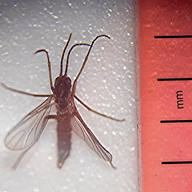
- Small dark mosquito-like flies drifting up from the pot when you water or brush the plant.
- The same flies running across the surface of the growing medium, the rim of the pot, or nearby wet mulch.
- Adults collecting at windows, which is usually what makes people notice them at all.
- Larvae with a shiny black head and a clear whitish legless body in the top inches of the mix.
- A soil surface that is permanently dark and damp, often with algae or a crust of green.
- Seedlings and young plants stalling, since those are the ones whose root hairs the larvae actually damage.
What it gets mistaken for
Fruit flies. Fruit flies are stubbier and tan with red eyes, and they hover around ripe fruit and drains. Fungus gnats are slim, dark, long-legged and stay with the pots.
Shore flies. Shore flies are stouter, stronger fliers with spotted wings and short antennae, and they feed on algae rather than mining the mix.
Whiteflies. Whiteflies are white rather than dark, and they come off the leaves rather than off the soil.
Plants it affects
Houseplants in peat-rich potting mix, Seedlings and young transplants, Container plants kept permanently moist, Greenhouse and interior plantings, and wet mulch or compost nearby.
How to treat it
From the gentlest step upward. Move to the next step only if the one before it has not worked within a week or two.
- Change the watering, which is the actual fix. Let the top inch or two of the growing medium dry between waterings. That single change cuts egg and larval survival and makes the mix far less attractive to egg-laying females.
- Check the drainage. Empty saucers and cachepots, and confirm the pot drains rather than holding a reservoir at the bottom.
- Confirm what you have before treating: push a quarter-inch slice of raw potato into the mix, lift it after a couple of days, and look for larvae on the underside.
- Clear the standing sources nearby, such as wet mulch piles, algae films and decaying plant debris on the surface.
- Hang or lay yellow sticky cards at the soil surface to catch adults and to tell you whether numbers are falling.
- For larvae in the mix, soil drenches of Bacillus thuringiensis subspecies israelensis or the beneficial nematode Steinernema feltiae are the standard options. Follow the label, and check your local extension service for what is registered where you are.
How to keep it away
- Water by weight or by feel rather than on a schedule, so the surface dries between rounds.
- Use pots with drainage holes and a mix that drains, rather than a peat-heavy mix that stays saturated.
- Keep the surface clear of fallen leaves and decaying matter, which is what the larvae feed on.
- Inspect and isolate new plants, since infested nursery mix is the usual way they arrive.
Related problems
- Aphids: Aphids are soft-bodied sap-feeding insects that gather in dense colonies on the newest growth.
- Spider mites: Spider mites are tiny sap-feeding arachnids that work on the undersides of leaves.
- Mealybugs: Mealybugs are slow-moving sap feeders that coat themselves in white wax.
- Whiteflies: Whiteflies are small white sap-feeding insects that live on leaf undersides.