Two tiny flies turn up in kitchens in the fall, one of them from the houseplants and one of them from the fruit bowl, and they get blamed for each other constantly. The University of Wisconsin-Madison Division of Extension says plainly that fungus gnats are often mistakenly identified as fruit flies, though they are two distinct insects. The fungus gnats vs fruit flies question matters because the fix for one does nothing for the other.
Fungus gnats rest on damp potting mix and the pot rim and fly weakly in short erratic bursts when disturbed; they are dark, slender and mosquito-like. Fruit flies hover over ripe fruit, spills and the trash, fly steadily, and are stouter and tan to brown with red eyes. Watch where the fly settles and the answer is usually clear.
That is the three-second test. The rest of this post gives the closer tells for when a fly will not sit still, what each answer means for the plant, and what to do in each case.
Where they sit
This is the tell that needs no magnifying glass. Fungus gnats live where their larvae live. UC IPM describes the larvae as living in moist organic debris or potting soil, and Colorado State University Extension says they are usually in the top two to three inches of the growing medium. The adults emerge from the pot and stay near it. Texas A&M AgriLife Extension describes them emerging from the potting media of houseplants, and Colorado State notes that the adults often accumulate around window frames and that problems are most noticeable in late fall and winter, which in a house means the windowsill where the plants are.
Fruit flies live where their food is. UC IPM says they feed in damaged or fermenting, overripe fruit of all kinds. Texas A&M lists the breeding sites in a home: overripe or damaged fruit, especially bananas, spoiling vegetables such as rotting onions or potatoes, spilled syrups, wine or beer, and trash receptacles, especially the wet bottoms of trash cans. A fly that keeps returning to the fruit bowl, the recycling or the sink is telling you what it is.
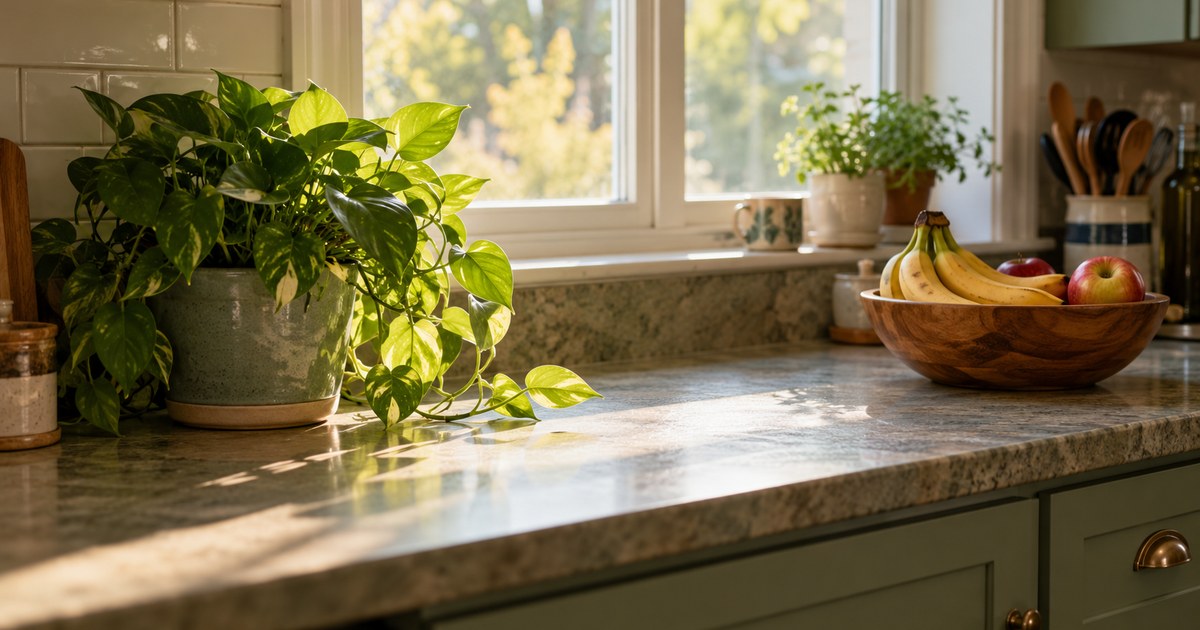
A plant that sits on the kitchen counter next to the fruit bowl is the case that confuses people, and it is worth separating the two by moving one of them for a day. Flies that follow the fruit are fruit flies. Flies that stay with the pot are gnats.
How they fly
Colorado State describes fungus gnat adults as weak fliers, typically flying in short, erratic patterns. They rise from the mix when the pot is touched or watered, flutter a short distance, and settle again, often on the mix itself or the lowest leaves. UC IPM describes them as delicate-looking flies similar in appearance to mosquitoes. A fruit fly, by contrast, cruises. It hovers over the fruit and moves purposefully across the kitchen, and it is quick enough that it is hard to swat.
What they look like up close
If a fly lands on a white surface, or ends up on a sticky card, the build settles it.
A fungus gnat is slender. UC IPM gives its size as about a sixteenth to an eighth of an inch, with slender legs and segmented antennae longer than the head, and wings that are light gray to clear. Wisconsin describes the adults as delicate, dark brown or black flies about an eighth of an inch long, and both Wisconsin and Colorado State point to a distinct rounded Y-shaped set of veins near the wing tips. Think of a very small mosquito that does not bite; UC IPM confirms that adult fungus gnats do not damage plants or bite people.
A fruit fly is stout. UC IPM gives its size as a twelfth to an eighth of an inch and describes the adults as brown to yellowish flies with red eyes. Texas A&M says about an eighth of an inch with a stout, cylindrical body and reddish eyes. The red eyes are the single most reliable up-close tell, and a phone camera held near a fly on a window or a sticky card will usually show them. Texas A&M also notes a feathery bristle on the tip of the antenna, which separates fruit flies from other small indoor flies for anyone with a hand lens.
Where the fly cannot be caught, a photo of it on a leaf or a card is enough to tell gnat from fruit fly from the small winged adults of whitefly, which also get lumped in as “little flies on my plant.” That is the step where Plant Sickness Identifier is the practical route to the right fix, and the fungus gnat guide lays the lookalikes out side by side for comparison.
The vinegar dish
The popular test is a dish of vinegar with a drop of dish soap, and it does tell you something, just not quite what people think. Texas A&M says fruit flies are attracted to vinegar and almost any decaying fruit, and that they breed in almost any fermenting fruit or vegetable. A dish that fills up with small tan flies with red eyes is confirming fruit flies.
None of the extension sources above lists vinegar as the way to find fungus gnats. Their monitoring tools are different: yellow sticky cards near the plant, which Wisconsin, UC IPM and Colorado State all describe, and a slice of raw potato laid cut side down on the mix, which draws the larvae up so they can be seen. A vinegar dish that stays empty while small dark flies keep rising from the pots has at least ruled the fruit bowl out.
What each answer means for the plant
This is where the two part company completely.
Fruit flies mean nothing is wrong with the plant. They are breeding in something fermenting, and UC IPM’s management advice is sanitation: remove and dispose of overripe fruit. Find the banana at the back of the bowl, the onion going soft in the cupboard, the recycling with a wine bottle in it, the wet bottom of the trash can. Once the breeding site is gone the flies go with it. No change to the plant’s care is needed.
Fungus gnats mean the potting mix is staying wet. The larvae need constantly damp organic mix to live, which is why every extension source gives the same cultural fix. UC IPM says to avoid overwatering, provide good drainage and allow the surface of the container soil to dry between waterings. Wisconsin says to let the top inch dry before watering, or to water from the bottom. Colorado State says to let the medium dry between waterings, especially the top one to two inches. The gnats are mostly a nuisance in themselves, since Wisconsin notes that root damage from the larvae is rare in home settings, though UC IPM has seen significant root damage in houseplants where high populations build up in wet, organic-rich mix. They are also a reliable sign that the plant is being watered more than it can use. Wisconsin gives the life cycle as three to four weeks, so the adults keep appearing for about a month after the watering changes. The how to get rid of fungus gnats post walks through the full method, and the mold on plant soil post covers the white fuzz that often turns up on the same wet mix.
The one-minute version
- Where does it rest? Potting mix and pot rim: gnat. Fruit, spills, trash: fruit fly.
- How does it fly? Short, weak, erratic flutter: gnat. Steady hover and cruise: fruit fly.
- What does it look like? Slender, dark, mosquito-like: gnat. Stout, tan, red eyes: fruit fly.
- What does the vinegar dish catch? Red-eyed flies: fruit flies. Nothing while flies rise from the pots: gnats.
- What to change? Fruit flies: find the fermenting food. Gnats: let the top of the mix dry.
Both insects are harmless to people. Fruit flies never touch the plant, and fungus gnat larvae only become a problem for it at high populations in mix that stays wet. The reason to tell them apart is that one of them is a kitchen cleanup and the other is a watering habit, and treating the wrong one is how a fly problem lasts all winter. The bugs section of the symptom checker covers the other small insects that get mistaken for each other on houseplants.
Sources
- Fungus Gnats on Houseplants, University of Wisconsin-Madison Division of Extension
- Fungus Gnats, UC Statewide Integrated Pest Management Program (UC IPM)
- Fungus Gnats as Houseplant and Indoor Pests, Colorado State University Extension
- Fruit Flies, UC Statewide Integrated Pest Management Program (UC IPM)
- Indoor Flies and Their Control, Texas A&M AgriLife Extension Service