- Type
- Fungal disease
- Severity if untreated
- High
- Peak season
- Any time of year. It concentrates in the cool, low-light part of the year indoors, when plants use far less water than they are still being given, and after prolonged wet spells outdoors.
- Also called
- Pythium root rot, Phytophthora root and crown rot, overwatering rot
Signs to look for
- A plant wilting even though the soil or potting mix is wet.
- Leaves turning dull green, yellow, red or purplish, in a way that reads as a nutrient problem.
- Growth stunted, new leaves small, lower leaves dropping.
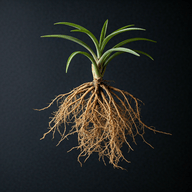
- Lift the plant and the roots are soft and brown rather than firm and pale, often with a bad smell.
- Darkened bark or tissue around the crown and upper roots on shrubs and trees.
- In the landscape, sudden collapse with the first warm weather of the season, when the damaged root system can no longer keep up.
What it gets mistaken for
Drought stress. A thirsty plant wilts with dry soil and firm roots, and recovers within hours of watering. Root rot wilts with wet soil and does not recover.
Nutrient deficiency. Deficiency discolors leaves while roots stay white and firm. If the roots are soft and brown, the leaf color is a symptom, not the problem.
Fusarium wilt. Fusarium wilt gives one-sided yellowing and brown streaks in the stem's vascular tissue, with roots that are not mushy.
Plants it affects
Houseplants in pots without drainage, and anything kept in a cachepot that holds water, Succulents and cacti, which fail fastest in wet mix, Seedlings and cuttings, where it shows up as damping off, Rhododendron, azalea, avocado, citrus and many landscape trees and shrubs in poorly drained soil, Tomatoes and other vegetables on heavy or compacted ground.
How to treat it
From the gentlest step upward. Move to the next step only if the one before it has not worked within a week or two.
- Stop watering and let the mix dry. Reducing soil moisture is the first instruction in extension guidance, ahead of everything else.
- Check the plumbing: confirm the pot has drainage holes, empty saucers and cachepots, and stop any sprinkler that is soaking the base of a shrub or tree.
- Unpot the plant and look at the roots, which is the only way to confirm the diagnosis rather than guess it.
- Cut away soft brown roots with a clean tool and repot into fresh, well-drained potting mix in a container with drainage. Disinfest tools, surfaces and clay pots between plants.
- Water by need from then on, checking that the top of the mix has dried rather than following a schedule.
- For plants in the ground, improve drainage, avoid prolonged saturation around the base, keep irrigation off the trunk by watering at the dripline, and never plant deeper than the plant sat in the nursery.
- For a plant whose root system is mostly gone, extension guidance is direct that replacing it is the practical choice. No product restores roots that have rotted, which is why the watering and drainage steps come first.
How to keep it away
- Pot into a mix that drains, in containers with drainage holes, and refresh mix as it ages, settles and compacts.
- Water when the plant needs it rather than on a fixed schedule, especially through the low-light months.
- Do not plant trees or shrubs deeper than they grew in the nursery, and keep water away from the crown and trunk.
- Clean pots and tools between plants, and avoid reusing media, since these pathogens carry over.
Related problems
- Powdery mildew: Powdery mildew is a fungal disease that grows on the outside of leaves as white powdery patches.
- Black spot (roses): Black spot is the defining rose disease, caused by the fungus Diplocarpon rosae.
- Anthracnose: Anthracnose is a group of fungal diseases that need splashing water to spread.
- Fusarium wilt: Fusarium wilt is a soil-borne fungus that enters through the roots and blocks the plant's water-conducting tissue.