- Type
- Fungal disease
- Severity if untreated
- High
- Peak season
- Symptoms appear in the warm part of the growing season, as the disease is favored by warm soil and warm weather. Plants often look healthy until the first real heat load.
- Also called
- Fusarium oxysporum, fusarium wilt of tomato, vascular wilt
Signs to look for
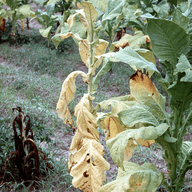
- One-sided wilting, affecting half of the plant, a single branch, or one side of a leaf.
- Lower and older leaves yellowing first, with the yellowing then spreading to higher branches.
- Wilting that looks recoverable at first and then becomes permanent.
- Cut a stem near the base lengthwise and the vascular tissue carries brown streaks, extending well up the stem.
- Growth stunted overall, with few or no fruit developing.
What it gets mistaken for
Root rot. Root rot gives soft brown mushy roots and wilting on the whole plant at once. Fusarium wilt's signature is one-sided symptoms plus brown streaking inside the stem.
Drought or heat wilt. Heat wilt affects the entire plant evenly and reverses completely after watering, leaving no vascular discoloration.
Nitrogen deficiency. Deficiency yellows the lower leaves uniformly on both sides of the plant, and the stem stays clean when cut.
Plants it affects
Tomato, the classic host, Carnation and gladiolus, where symptoms are also one-sided at first, Chrysanthemum, cyclamen and China aster, Seedlings of many crops, where it shows as yellowing, stunting and death.
How to treat it
From the gentlest step upward. Move to the next step only if the one before it has not worked within a week or two.
- Confirm it before acting. Cut a stem lengthwise near the base and look for brown vascular streaking, which is the detail that separates this from drought, heat and root rot.
- Remove affected plants along with their roots, and dispose of them rather than composting.
- Clean tools, equipment and footwear between plantings, since the fungus travels on infested soil.
- Rotate out of the affected crop for several years. The fungus survives in soil without a host for up to ten years, so a single season away from it does little.
- Start clean: healthy transplants, sterile potting media, and new or disinfested containers rather than reused ones.
- Plant resistant or tolerant cultivars, which extension guidance names as the most effective control available, ahead of any soil treatment.
- There is no known cure once the disease is established in a plant, so the work is in the soil and the variety choice for next season rather than in a spray. For any product, follow the label and check your local extension service.
How to keep it away
- Buy resistant cultivars, which for tomato are marked on the packet or label.
- Rotate crops on a multi-year cycle rather than replanting the same family in the same ground.
- Use pathogen-free stock, sterile media and clean containers.
- Clean soil off tools and equipment when moving between beds or greenhouses.
Related problems
- Powdery mildew: Powdery mildew is a fungal disease that grows on the outside of leaves as white powdery patches.
- Black spot (roses): Black spot is the defining rose disease, caused by the fungus Diplocarpon rosae.
- Root rot: Root rot is what follows when roots sit in saturated soil.
- Anthracnose: Anthracnose is a group of fungal diseases that need splashing water to spread.