- Type
- Fungal disease
- Severity if untreated
- Moderate
- Peak season
- Peaks in the mild, humid, shaded stretches of the growing season rather than in peak heat. Moderate temperatures of roughly 60 to 80 degrees Fahrenheit plus shade encourage it.
- Also called
- powdery mildews, white mold on leaves
Signs to look for
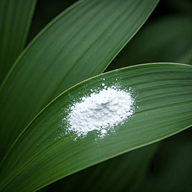
- White powdery patches on leaves and shoots, usually noticed first on upper surfaces, spreading outward as circles that merge.
- New leaves and shoots twisted or distorted as they expand through the infection.
- Leaves turning yellow, then brown, and dropping early.
- The same powder on stems, flower buds and sometimes fruit.
- Worst on the shaded, crowded side of the plant rather than the side in full sun.
What it gets mistaken for
Downy mildew. Downy mildew puts its fuzzy growth on the leaf underside and shows angular yellow blotches above, bounded by the veins. Powdery mildew sits on top as a spreading white bloom.
Hard-water or spray residue. Residue wipes off cleanly and does not come back or spread. Mildew regrows and expands over days.
Botrytis. Botrytis is fuzzy and gray-brown and grows on tissue that is already decaying. Powdery mildew is dry, white, and colonizes healthy leaves.
Plants it affects
Roses, crape myrtle, lilac, phlox and zinnia, Begonia, chrysanthemum, dahlia and hydrangea, Azalea, rhododendron, euonymus and oak, Cucurbits, peas, apples, grapes and gooseberries.
How to treat it
From the gentlest step upward. Move to the next step only if the one before it has not worked within a week or two.
- Pick off and dispose of the most heavily affected leaves and shoots rather than shaking them out over the plant.
- Open the plant up. Prune excess foliage for air circulation and thin crowded plantings, since shade and still air are what the disease runs on.
- Move container plants into a sunnier position, since sunny locations suppress it and deep shade encourages it.
- Keep the roots evenly watered and mulched. Intermittent drought stress at the roots combined with humid air is a known setup for infection.
- Overhead sprinkling in the morning washes spores off infected plants and can slow an outbreak, provided leaves dry before evening.
- Horticultural oils and neem oil are used on existing infections, while sulfur and potassium bicarbonate products are used preventively before the disease establishes. Follow the product label, and check your local extension service for what is registered where you garden.
- Where a plant mildews every year, replace it with a resistant cultivar. These exist for roses, crape myrtle, rhododendron and phlox among others.
How to keep it away
- Choose resistant cultivars for the plants that get it every season.
- Plant in sun with real spacing, and prune for an open structure so air moves through the canopy.
- Mulch and water the root zone so plants are not swinging between drought stress and humidity.
- Clear and destroy fallen infected leaves at the end of the season.
Related problems
- Downy mildew: Downy mildew is caused by oomycetes, water molds rather than true fungi.
- Black spot (roses): Black spot is the defining rose disease, caused by the fungus Diplocarpon rosae.
- Root rot: Root rot is what follows when roots sit in saturated soil.
- Anthracnose: Anthracnose is a group of fungal diseases that need splashing water to spread.