- Type
- Fungal disease
- Severity if untreated
- High
- Peak season
- Symptoms appear from spring onward and persist as long as leaves are on the plant. Outbreaks follow warm wet spells, since the fungus needs free water to reproduce.
- Also called
- rose black spot, Diplocarpon rosae, black spot of rose
Signs to look for
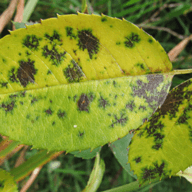
- Black or purple-black spots on the upper surface of the leaves, with feathery or fringed margins.
- Yellowing spreading through the leaf around the spots while the spots themselves stay dark.
- Infected leaves dropping early, typically working up from the bottom of the plant.
- Small black scabby lesions on young stems.
- A bush that defoliates repeatedly through the season and goes into the next one weakened.
What it gets mistaken for
Rose rust. Rust shows orange pustules on the leaf underside with yellow flecking above. Black spot's marks are dark and mostly on the upper surface.
Rose downy mildew. Downy mildew makes angular purple-brown blotches with fuzzy growth underneath and moves fastest in cool wet weather, often from the top of the plant down.
Spray or fertilizer burn. Chemical burn appears all at once on the leaves that were wet at the time, with no fringed margins, and it does not spread to new growth afterward.
Plants it affects
Roses, with hybrid teas, floribundas, climbers and patio types most often affected, Older species roses, which the RHS notes are little affected.
How to treat it
From the gentlest step upward. Move to the next step only if the one before it has not worked within a week or two.
- Pick up and dispose of fallen leaves rather than leaving them under the bush, since the fungus persists on both living and dead leaves.
- Remove spotted leaves as they appear, which slows the cycle within the plant.
- Prune out infected stems during the dormant season, before the leaves come back in spring. Stem lesions are how the fungus carries over to start the next year.
- Prune the canopy for air circulation so leaves dry faster after rain and dew.
- Water at the base, and if you do wet the foliage, do it in the morning or at midday so leaves dry before evening. Infection requires leaves to stay wet for more than about seven hours.
- Plant resistant cultivars where black spot returns every year. This is the change that actually ends the cycle rather than managing it.
- If a fungicide is used, choose one labeled for black spot on roses, and follow the product label plus your local extension service for what is registered where you garden.
How to keep it away
- Choose cultivars with black spot resistance, and give them a sunny, open position.
- Space plants and prune for airflow so foliage dries quickly.
- Clear fallen leaves in autumn, or bury them under a layer of mulch.
- Water at soil level, early in the day.
Related problems
- Powdery mildew: Powdery mildew is a fungal disease that grows on the outside of leaves as white powdery patches.
- Downy mildew: Downy mildew is caused by oomycetes, water molds rather than true fungi.
- Root rot: Root rot is what follows when roots sit in saturated soil.
- Anthracnose: Anthracnose is a group of fungal diseases that need splashing water to spread.