- Type
- Fungal disease
- Severity if untreated
- High
- Peak season
- Peaks in cool, damp, humid weather, the shoulder seasons outdoors and any prolonged damp spell under glass. Extension guidance puts the favorable range at roughly 70 to 77 degrees Fahrenheit with high humidity.
- Also called
- gray mold, Botrytis cinerea, botrytis blight, grey mould
Signs to look for
- Spots on petals and leaves that start almost translucent, then turn brown and look water-soaked.
- Flowers and buds shriveling and dying, often before they open.
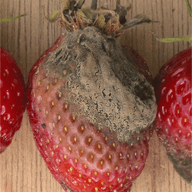
- Affected fruit, leaves, petals and soft stems going dark, soft and wilted.
- Fuzzy gray-brown mold covering the decaying tissue once it stays wet, giving it a woolly look.
- A puff of spores lifting off when the affected part is disturbed.
- On roses, large diffuse target-like lesions on green canes.
What it gets mistaken for
Powdery mildew. Powdery mildew is a dry white bloom on healthy leaves. Botrytis is gray-brown, fuzzy, and grows on tissue that is already dying.
Downy mildew. Downy mildew's growth is confined to the underside of living leaves, paired with angular blotches above. Botrytis covers whole decaying structures from any side.
Sooty mold. Sooty mold is a superficial black film growing on insect honeydew. The tissue underneath is intact, not rotting.
Plants it affects
Cyclamen, primula, pelargonium, chrysanthemum and fuchsia, Roses, azalea, rhododendron and hydrangea, Strawberries, raspberries, grapes and other soft fruit, Tomatoes, cucumbers, lettuce and beans, Cacti and bird of paradise.
How to treat it
From the gentlest step upward. Move to the next step only if the one before it has not worked within a week or two.
- Remove spent flowers, dead leaves and any declining tissue promptly, along with fallen debris and weeds underneath the plant. This removes the entry point the fungus needs.
- Handle affected parts gently and bag them where they are, since disturbing moldy tissue releases a cloud of spores over everything nearby.
- Improve air circulation around the plants and increase spacing, which is what brings humidity at the leaf surface back down.
- Stop wetting the foliage. Water at the base, early in the day, so nothing stays wet for long stretches. Infection follows tissue staying wet for six or more hours, or humidity above roughly 90 percent.
- Avoid wounding stems and leaves while working, because damaged tissue is where the fungus establishes.
- Ventilate greenhouses and indoor growing spaces, particularly overnight when humidity climbs.
- Where a fungicide is used, it is preventive rather than curative, applied to protect healthy tissue. Follow the product label and check your local extension service for what is registered in your area.
How to keep it away
- Deadhead and clear dead material as a routine, not as a response.
- Space plants and ventilate so leaf surfaces stay dry and humidity stays moderate.
- Water at soil level early in the day rather than overhead in the evening.
- Handle plants carefully during potting and pruning so there are fewer wounds to colonize.
Related problems
- Powdery mildew: Powdery mildew is a fungal disease that grows on the outside of leaves as white powdery patches.
- Downy mildew: Downy mildew is caused by oomycetes, water molds rather than true fungi.
- Black spot (roses): Black spot is the defining rose disease, caused by the fungus Diplocarpon rosae.
- Root rot: Root rot is what follows when roots sit in saturated soil.