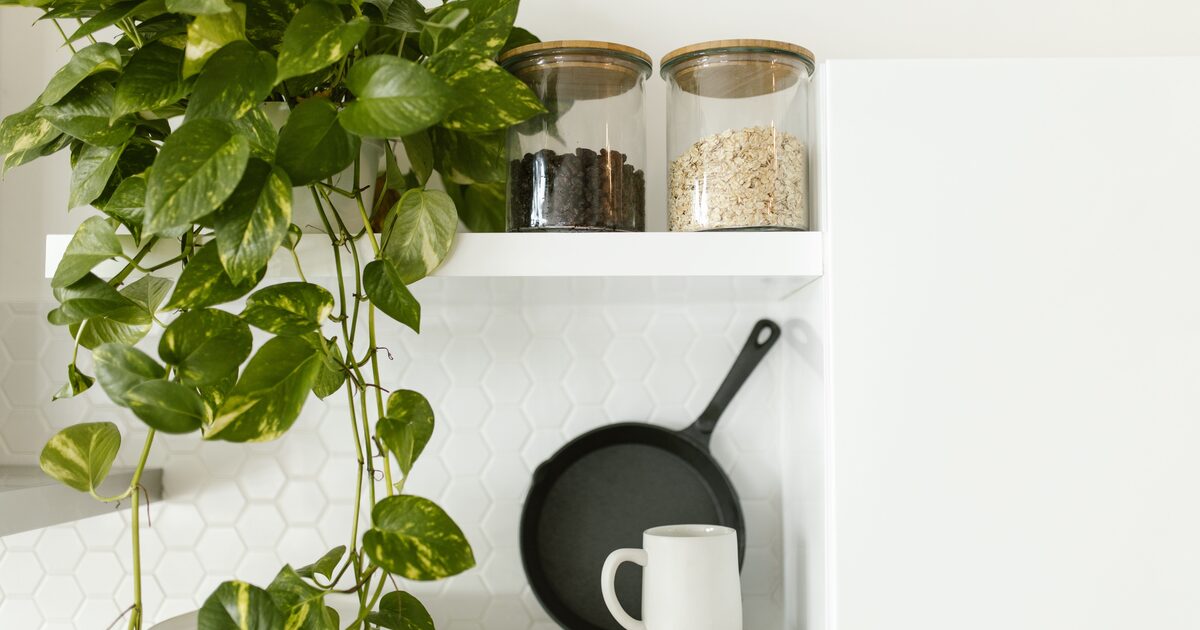
Pothos leaves turning yellow is one of the most common houseplant searches, for a plant with a reputation for being almost impossible to kill. That reputation is mostly deserved. Pothos tolerates low light and a missed watering far better than most houseplants, which is exactly why, when it does yellow, the cause is usually the one thing it tolerates badly.
When pothos leaves turn yellow, overwatering is the most likely cause. Penn State Extension says too much water leads to root rot, one of only a few problems with this plant. The next suspects are direct sun, which Penn State says yellows the leaves, and plain age: older leaves on a long vine yellow and drop naturally.
So there are really three common answers, and they leave different patterns on the plant. Here they are in the order worth checking.
Are the yellow leaves just old?
Start here, because it is the answer that needs no fix. The University of Wisconsin-Madison Division of Extension says older leaves will turn yellow and drop off naturally, eventually ending up with most of the leaves at the end of the vine. NC State Extension says the same, noting that older leaves naturally yellow and drop.
This is the pattern behind a lot of worried searches. A pothos that has been trailing for a year or two will have long bare stretches near the pot and a cluster of healthy leaves at the tips. The yellowing happens one leaf at a time, on the oldest leaves closest to the base of each vine, while the growing tips stay green and keep producing new leaves.
That is how the plant grows, not a symptom. NC State suggests pruning stems periodically to keep the plant fuller, and Wisconsin says to selectively prune to keep vines a reasonable length and to promote new growth. Cutting a long vine back makes it branch closer to the pot.
The pattern stops being normal when yellowing shows up on new leaves, when several leaves yellow at once, or when it runs along the whole length of a vine rather than only the oldest part.
Is my pothos overwatered?
This is the most likely cause of yellowing that is not just age. Penn State calls root rot from too much water one of only a few problems with this plant. Clemson’s Home & Garden Information Center says overwatering is a common problem that leads to root rot, and that yellow leaves typically point to either too much water or too little fertility. NC State puts the balance plainly: pothos is more tolerant of underwatering than overwatering, so it is better to err on the dry side than to keep the mix constantly wet.
The watering advice from the extension sources is consistent. Wisconsin says to water only when the soil surface is dry, in a well-aerated mix. Clemson says to let the soil dry between waterings, then water thoroughly. Penn State says to let the soil dry between waterings too.
What overwatering looks like on a pothos:
- Yellowing on several leaves at once, including newer ones, rather than just the oldest leaf on each vine.
- Darkening at the leaf edges. NC State notes that root rot and blackening of the leaf margins can occur with overwatering.
- Poor roots. Wisconsin describes the root symptom of too much moisture as roots that are brown or missing entirely.
- A pot that stays heavy and wet for many days after watering.
The check is physical. Push a finger into the mix. If it is still wet several days after watering and the plant is yellowing, water is the likely cause. If yellowing continues, slide the plant out and look at the roots: firm and pale is healthy, brown and soft is rot. The overwatered plant symptoms post covers the difference between too much and too little water in detail, and the root rot guide covers what to do if the roots are damaged.
The dry side of the balance is much less of a worry with pothos. Penn State notes that too little water causes temporary wilting, and the plant recovers once it is watered.
Is it too much sun?
Pothos likes bright light but not direct sun. Penn State says directly that direct sun will lead to the yellowing of leaves. Wisconsin says pothos does best in filtered light and does not tolerate much direct sunlight. Clemson adds that leaf scorch and tip dieback usually come from low humidity or light that is too intense.
Sun yellowing has a location. It shows up on the leaves facing the window, on the parts of the plant that sit in a patch of direct afternoon sun, often with pale, bleached areas rather than an even yellow across the whole leaf. The leaves on the shaded side of the same plant stay green. Moving the plant a few feet back from the window, or behind a sheer curtain, is the whole fix.
Could it be too little light?
Too little light is less likely to cause yellow leaves on a pothos than on most plants. NC State says pothos prefers bright, indirect light but survives for long periods in low light. What low light does instead is change the leaves: Wisconsin and Clemson both note that variegated pothos lose their variegation in low light, and Penn State says the plant will eventually lose its desirable leaf qualities. A marbled pothos that has gone plain green, with small leaves spaced far apart, is asking for more light, not less water.
What about feeding and pests?
Clemson lists insufficient fertility alongside overwatering as a cause of yellow leaves, and suggests a balanced houseplant fertilizer during spring and summer. Wisconsin adds that excess fertilizer buildup can also cause yellowing, so feeding more is not automatically better. Check water and light before blaming nutrients.
Pests are uncommon. Clemson says indoor pothos are generally pest-free but can occasionally get spider mites or mealybugs, and Wisconsin and NC State name mealybugs and scale. Look for white cottony tufts where the leaves join the stem, or fine speckling on the leaves. If you find white fluff, the mealybugs post covers how to confirm and remove it.
Temperature swings
Clemson advises keeping pothos away from air conditioning vents in summer and heating vents in winter, since temperature extremes can damage leaves. Wisconsin notes that sudden temperature changes can cause brown spotting. A pothos next to a radiator or a drafty door may show damaged leaves on the side facing it.
What to check, in what order
- Look at where the yellow leaves are. Only the oldest leaves near the base of long vines is usually normal aging.
- Push a finger into the mix. Still wet days after watering, with yellowing on newer leaves, points at overwatering.
- Check the light. Yellowing on the side facing a sunny window points at direct sun.
- Check the leaf joints and undersides for white fluff or speckling.
- If it is wet and still yellowing, check the roots.
The monstera post walks through the same pattern on a close relative, and the symptom checker’s yellow-leaf section covers yellow leaves on any plant.
Where the cause is less obvious, typically a plant with some aging leaves and some yellowing from water or sun at the same time, a photo helps separate them. Plant Sickness Identifier reads a photo of the vine and a close shot of a yellow leaf and tells you whether the pattern looks like aging, water or light, and taking another scan a few weeks after you change the watering shows whether the new leaves are coming in green.
Sources
- Pothos as a Houseplant, Penn State Extension
- Pothos, Epipremmum aureum, Wisconsin Horticulture, University of Wisconsin-Madison Division of Extension
- How to Grow Pothos Indoors (Epipremnum spp.): Care, Cultivars, and Common Problems, Clemson Cooperative Extension Home & Garden Information Center
- Epipremnum aureum, North Carolina Extension Gardener Plant Toolbox, NC State Extension