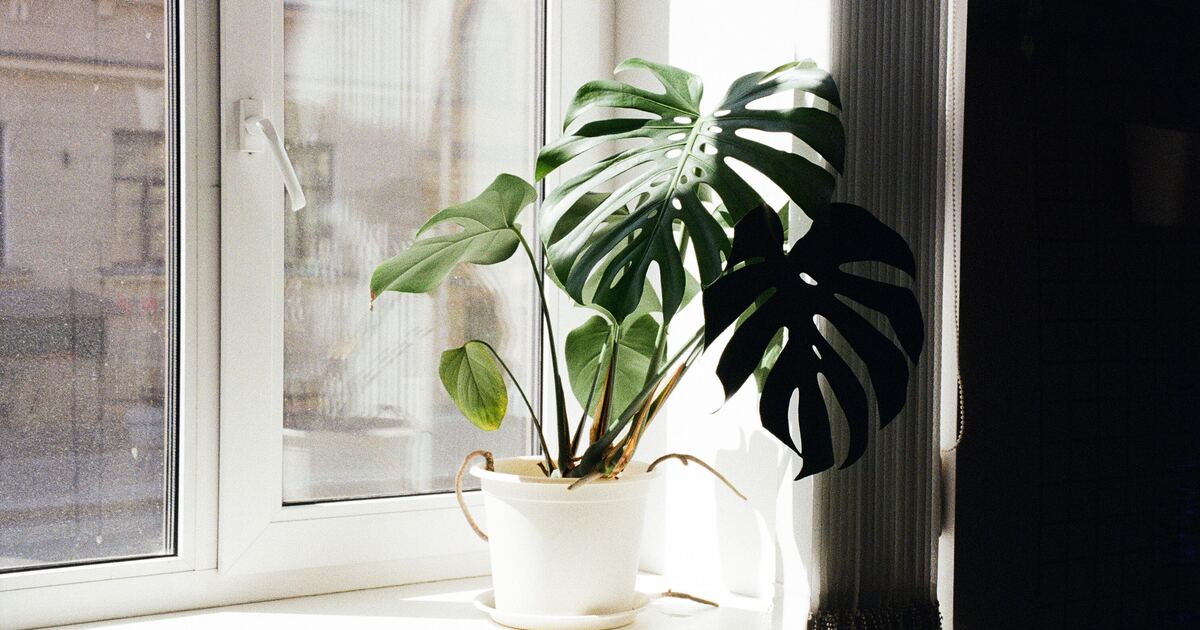
Monstera leaves turning yellow most often means the potting mix is staying wet too long. The University of Connecticut notes monstera is prone to root diseases, especially in colder seasons, and that overwatering is more often the cause. A single oldest leaf yellowing while new growth stays healthy is usually normal aging, not a problem at all.
The useful question is not whether the plant is sick but which leaf went yellow first, because that single observation separates the causes that matter for this plant.
Is one yellow leaf on a monstera normal?
Often, yes. The Royal Horticultural Society says that older leaves on healthy houseplants will naturally turn brown and die back over time as the plant matures, which is no cause for concern. A monstera produces large leaves slowly, so when one of the oldest leaves at the base turns yellow and eventually drops while the plant keeps pushing out healthy new leaves, that is the plant retiring a leaf it no longer needs.
The pattern that says “normal” has three parts: it is one leaf at a time, it is the lowest and oldest leaf, and the rest of the plant looks fine. The moment that pattern breaks (several leaves at once, new leaves yellowing, or yellow patches rather than an even fade), you are looking at something else. The same which-leaf-first logic applies to other houseplants, as orchid leaves turning yellow shows.
The University of Maryland Extension makes the point that noticing the pattern and progression of symptoms is what helps diagnose the cause. For a monstera, that pattern points to a short list of causes, ranked below by how often each one is the answer.
Is my monstera overwatered?
This is the most likely cause, and it is worth ruling in or out before anything else. On a monstera, crisp brown edges on otherwise yellowing leaves can also mean salt buildup, since UConn notes the plant is easily burned by high soil salts.
The tell is which leaves go. The RHS describes overwatering as old and new leaves yellowing and dropping at the same time, often with browning in the middle of leaves, stem rot and dark, mushy roots. So when a monstera yellows on young leaves as well as old ones, water is the first suspect.
The contradiction that settles it is a plant that droops while the soil is wet. The University of Wisconsin-Madison Division of Extension describes root rot as plants wilted even though the soil is wet. Its description of the roots is the thing to check: rotted roots are soft and brown, and they may have a bad odor, while healthy ones are firm and pale.
The routine fix comes straight from the extension guidance. UConn says to allow the top two to three inches of soil to dry between waterings. NC State Extension puts it as watering thoroughly, then letting the top quarter to one third dry out. Wisconsin adds not to let plants sit in drainage water, so empty the saucer or the decorative outer pot after watering. The full symptom picture and repotting steps are in the root rot guide.
Watering on a fixed schedule is how this mistake happens. A monstera in bright summer light dries out much faster than the same plant in a dim autumn room, and UConn’s warning about colder seasons is exactly that. Water when the top of the mix is dry, not when the calendar says so.
Or is it underwatered?
Much less common with monstera, but it happens, and it reverses the pattern. The RHS lists wilted leaves and brown, crispy leaf edges as signs a plant is not getting enough water. The yellowing starts on the lower, older leaves, the tissue feels dry and papery rather than soft, and the pot feels light when you lift it.
The quick check is a finger pushed two or three inches into the mix. Dry all the way down, with crisp edges, points one way. Wet, with soft yellowing on new and old leaves, points the other. A thirsty monstera usually firms up after a thorough watering, while a rotting one does not. The yellow leaves post sets these two against the other common causes in more detail.
Is it the light?
Light problems show up in the new growth. The RHS says weak, spindly growth and pale leaves are signs a plant is not getting enough light, and that lower leaves may also turn yellow and fall. A monstera set well back from a window tends to produce small, pale new leaves on long stretches of stem.
Too much light looks different. UConn warns that monstera’s large leaves burn easily when the plant is moved to brighter conditions. The RHS describes that damage as brown scorched patches and a washed-out look. So pale, bleached or brown patches on the leaves nearest a sunny window, especially after a move, usually point to scorch rather than disease. NC State recommends moderate brightness but not direct sunlight, which is the range to aim for.
Could it be pests?
Pests come last in this list because they are the easiest to rule out, not because they never happen. UConn lists mealybugs, spider mites, scale and aphids as frequent monstera pests, and notes that mealybug feeding can result in yellowing and stunted growth.
Pest yellowing has a different texture: fine pale speckling, or yellowing around a spot where something is feeding, rather than an even fade across a whole leaf. Turn several leaves over and check where the leaf stalks meet the stem. White cottony tufts in those joints are the classic sign of mealybugs, and the mealybugs post covers how to confirm and remove them.
What about feeding?
Feeding matters less than most people think. UConn says monstera is easily burned by high soil salts but can tolerate regular fertilization during periods of active growth. That cuts both ways: a plant in the same mix for years can run short, but feeding hard to fix yellowing that is really caused by wet roots makes things worse. Rule out water first.
What to check, in what order
- Look at which leaves are yellow. One old leaf at the base, with healthy new growth, is usually normal. Old and new together points at water.
- Push a finger into the mix. Wet two inches down several days after watering points at overwatering. Dry all the way down points the other way.
- Check the light. Yellowing on the shaded side, small new leaves and long stems point at too little. Bleached or brown patches near a sunny window point at too much.
- Turn leaves over and check the leaf joints for speckling or white fluff.
- If the plant droops in wet soil, lift it out and look at the roots.
Most of those steps you can do without help. The one that trips people up is reading the leaf itself, where an even yellow fade, a scorched patch and pest speckling can look alike at arm’s length. A close photo of the yellowing leaf and one of the whole plant lets Plant Sickness Identifier read where the yellow sits and whether there is speckling or an insect in it, which usually narrows the list to one or two causes. The symptom checker’s yellow-leaf section covers the same causes for any plant.
Sources
- Monstera deliciosa, University of Connecticut Home & Garden Education Center
- Monstera deliciosa, North Carolina Extension Gardener Plant Toolbox, NC State Extension
- How to Help a Poorly Houseplant, Royal Horticultural Society
- Root Rots on Houseplants, University of Wisconsin-Madison Division of Extension
- Yellowing Leaves on Indoor Plants, University of Maryland Extension